Begumpuri Saree Weaving: Bengal’s Timeless Cotton Tradition
Begumpuri Saree Weaving: A Cotton Legacy from Bengal

In the vast landscape of Bengal’s handloom heritage, the Begumpuri saree stands quietly yet confidently - simple in structure, rich in history, and deeply rooted in everyday life. Known for its breathable cotton, striking borders, and lasting durability, the Begumpuri saree remains one of the most practical yet culturally significant weaves of West Bengal.
At Banbithi, where we celebrate handloom traditions and women-led craftsmanship, Begumpuri sarees represent a perfect blend of comfort, heritage, and timeless design.
Where Begumpuri Sarees Come From
The Begumpuri saree originates from Begampur, a small weaving town in the Hooghly district of West Bengal. This weaving tradition dates back more than 250 years, with roots in the Mughal era.
Historical accounts and local folklore suggest that a skilled weaver named Ghulam Husain, who migrated from Dhaka, introduced and developed cotton weaving techniques in the region during the 18th or 19th century. Over time, Begampur grew into a thriving handloom center, producing sarees for local zamindars and aristocratic families.
The name “Begumpuri” itself reflects this legacy, derived from Begum (noblewoman) and puri (town), symbolizing its association with royalty and refined taste.
A Saree Made for Everyday Life
Unlike heavily ornate silks or ceremonial weaves, Begumpuri sarees were designed for daily wear - durable, comfortable, and suited to Bengal’s warm climate. They became a staple among local communities, valued for their practicality and understated beauty.
Traditionally woven using 2/100s or 2/80s cotton yarn, Begumpuri sarees are:
-
Lightweight
-
Breathable
-
Soft yet sturdy
-
Ideal for long hours of wear
Their loosely woven structure allows airflow, making them especially comfortable in humid weather.
Distinctive Design Features
What makes Begumpuri sarees visually unique is their bold yet minimal aesthetic.
Borders
Begumpuri sarees often feature wide, contrasting borders, sometimes in the traditional Ganga-Jamuna style, where each side carries a different colour. These borders add character without overwhelming the simplicity of the saree.
Motifs
Common design elements include:
-
Geometric patterns
-
Floral accents
-
Temple-style serrated edges
-
Extra-weft border detailing
Earlier versions, known as Matapar sarees, had plain borders and coarser yarns. Over time, weaving techniques evolved to include dobby and jacquard attachments, bringing more variety to modern Begumpuri designs.
The Weaving Process
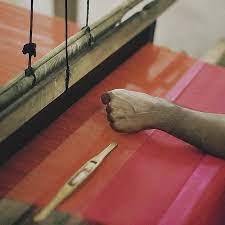
Begumpuri sarees are traditionally woven on pit looms or frame looms, using the tana–bana (warp–weft) technique passed down through generations.
The process includes:
-
Preparing cotton yarn
-
Designing the border and pallav
-
Setting the loom
-
Weaving by hand over several hours or days
The result is a saree that balances strength and softness—crafted slowly, with attention to detail.
A Craft That Continues to Evolve
In the early 2010s, efforts by the Weavers Association in Kolkata helped revive and modernize Begumpuri weaving. New techniques introduced:
-
Extra-weft borders
-
Geometric motifs
-
Refined textures
Today, Begampur stands alongside Shantipur and Dhaniakhali as one of Bengal’s key cotton weaving hubs.
Yet despite modernization, Begumpuri sarees remain fundamentally handloom, woven by artisans, not machines.

Why Begumpuri Sarees Still Matter
Begumpuri sarees represent:
-
Everyday elegance
-
Climate-friendly clothing
-
Sustainable handloom craft
-
Cultural continuity
They are sarees you can live in, comfortable enough for daily wear yet distinctive enough to carry heritage forward.
Begumpuri Sarees at Banbithi
At Banbithi, we curate Begumpuri sarees that stay true to their origins, handwoven, breathable, and rooted in Bengal’s weaving traditions. Each piece connects you to the artisans who keep this craft alive.
If you are looking for authentic handloom cotton sarees and meaningful craftsmanship, Banbithi brings you these timeless weaves with care and intention.
For those seeking the best saree shop in Siliguri, our collection offers handcrafted Begumpuri sarees that celebrate tradition while fitting effortlessly into modern wardrobes.
A Living Handloom Heritage
Begumpuri sarees may not always demand attention, but they earn admiration through comfort, resilience, and history. Woven for centuries and worn across generations, they remain one of Bengal’s most enduring cotton traditions.
To wear a Begumpuri saree is to carry forward a legacy - light in weight, rich in story.
Kaam Er Kaaj: The Hand Embroidery Stories of Bengal’s Village Women
Indian Batik: The Ancient Wax-Resist Art That Tells a Thousand Stories in Cloth
Related Posts

How to Take Care of an Old Pure Silk Saree - Before It's Too Late

Dhaniakhali Cotton: Bengal's Toughest, Most Beautiful Handloom Saree

Kantha Stitch: The Art That Turned Bengal's Old Threads Into India's Most Coveted Weave

Indian Batik: The Ancient Wax-Resist Art That Tells a Thousand Stories in Cloth

Kaam Er Kaaj: The Hand Embroidery Stories of Bengal’s Village Women

Murshidabad Silk: The Golden Thread of India’s Handloom Legacy