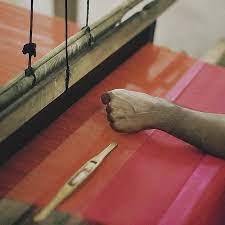
Dhaniakhali Cotton: Bengal's Toughest, Most Beautiful Handloom Saree
"Have you ever worn a saree that actually gets better every time you wash it — one that your grandmother wore, your mother still reaches for, and you'll one day pass on?"
If you answered yes, you already know Dhaniakhali cotton. And if you haven't discovered it yet, you're about to understand why this unassuming village in Hooghly district, West Bengal has been quietly producing one of India's most extraordinary handloom textiles for nearly a century.
In a marketplace cluttered with synthetic blends and machine-made imitations, the Dhaniakhali cotton saree stands apart, unapologetically handwoven, rooted in geography, and built to outlast every trend. This is not fast fashion. This is forever fabric.
The Village That Gave Its Name to a Saree
About 50 kilometres north of Kolkata lies a small town that most maps barely register, Dhaniakhali, in the Chinsurah subdivision of Hooghly district. What began as a village known for its superfine cotton dhotis gradually transformed, as weaver families pivoted to sarees in search of more sustainable livelihoods.
The origins of Dhaniakhali cotton weaving trace back to around 1935, when handloom textiles began defining the region's identity. By the early 1940s, weavers introduced dobby mechanisms and dyed yarns, expanding the palette beyond the original off-white body with its narrow red or black border. What stayed constant was the weave itself: tight, compact, uncompromising.
Today, Dhaniakhali sarees carry a Geographical Indication (GI) tag, a government-recognised mark of authentic origin that places this textile alongside India's most prestigious crafts. Over 900 skilled weavers and 1,000 ancillary artisans in Hooghly district continue this tradition.

What Makes Dhaniakhali Cotton Technically Unique
Most sarees use cotton. But not all cotton is woven the same way, and this is where Dhaniakhali cotton earns its reputation.
100S Yarn Count: Paper-Thin Yet Indestructible
Authentic Dhaniakhali sarees use a cotton yarn count of 80s to 100s in both warp and weft, meaning the thread is fine enough to feel almost weightless, yet twisted tightly enough to create an exceptionally compact, durable weave. The result is a saree that feels crisp and structured, not limp or shapeless.
The Starch Tradition
Before the cotton yarn is ever touched by a loom, weavers soak it in fresh water for days and then boil it in a starch made from rice and sago, a preparation technique passed down through generations. This ancient process enhances the yarn's natural strength and gives the finished saree its distinctive body and sheen.
The Signature Border
The hallmark of a Dhaniakhali cotton handloom saree is its bold, structured border, typically 1.5 to 2 inches wide, woven with dobby or jacquard patterns featuring peacock motifs, stripes, geometric checks, and the classic "matha paar" tooth-edge design. The border is not printed on, it is woven in, making it permanent and colour-fast throughout the saree's lifetime.
Unlike printed cotton sarees that fade and fray, the colour in a genuine Dhaniakhali cotton handloom saree is woven into the very structure of the fabric, which is why the colour, texture, and lustre hold intact wash after wash, year after year.
Dhaniakhali Sarees in 2026: Why They're Trending Again
There's a quiet but powerful shift happening in Indian fashion consciousness. Women who spent years chasing embellished, heavy-work sarees are returning to craft-forward simplicity, and Dhaniakhali sarees are at the centre of that return.
Part of it is sustainability. A genuine Dhaniakhali cotton handloom saree is produced without machines, using natural cotton, by artisan communities whose livelihoods depend on your purchase. Every saree you buy is a direct vote for the preservation of a GI-tagged heritage craft.
Part of it is also pure aesthetics. In a visual landscape dominated by maximalism, the quiet authority of a Dhaniakhali saree, its earthy tones, its confident structure, its bold woven border - feels genuinely distinctive. It is the saree that doesn't need embellishment to command a room.
How to Style a Dhaniakhali Cotton Saree
For everyday elegance
The crisp drape of a Dhaniakhali cotton saree makes it ideal for daily wear - office, college, or morning errands. Pair with a simple cotton blouse in a contrasting solid colour and flat kolhapuris. Minimal gold studs. Let the weave carry the look.
For festive occasions
Choose a Dhaniakhali cotton saree in deeper tones, ruby red, indigo, or forest green, with a silk or mirror-work blouse for Pujas, weddings, or family gatherings. The structured body of the saree drapes beautifully in Atpoure or Nivi style.
For the minimalist modern wardrobe
Neutral Dhaniakhali sarees in ivory, ecru, or stone grey with a thin contrasting border are perfect for the contemporary dresser who loves understated craftsmanship. Style with a sleeveless blouse, architectural jewellery, and a structured potli bag.
How to Spot Authentic Dhaniakhali Cotton
With the name gaining popularity, imitation products have entered the market. Here's what separates the real from the replica:
The fabric should feel distinctly crisp and firm, not limp. Run your thumb across the border - the pattern should be woven into the fabric, not printed over it. Check the reverse: in a genuine handloom piece, the weft threads form a slightly raised texture on the back. The selvedge (the woven edge along the saree's length) should be clean and tight, a sign of careful handloom technique. And look for the GI tag or the "Handloom Mark" certification when purchasing.
Conclusion
Dhaniakhali cotton is not a trend, it is a testimony. A testimony to a village that refused to let its craft die. To weavers who still soak yarn in rice starch before dawn. To a tradition so assured of its own quality that it needed no embellishment, only the honesty of a tight weave, a bold border, and six yards of pure cotton.
When you choose a Dhaniakhali cotton handloom saree, you're not just buying fabric. You're buying into a living heritage, one that has survived British industrialisation, partition, the rise of synthetic textiles, and the churn of fast fashion. And it's still here, still beautiful, still built to last.
Discover Banbithi's curated Dhaniakhali saree collection, and find the one that becomes yours for a lifetime.
Frequently Asked Questions About Dhaniakhali Cotton Sarees
What is Dhaniakhali cotton?
Dhaniakhali cotton refers to the tightly woven, high-count cotton handloom textile produced in and around Dhaniakhali village in Hooghly district, West Bengal. Characterised by its firm texture, crisp drape, and bold woven border, it is a GI-tagged heritage craft with roots going back to the 1930s.
What makes a Dhaniakhali cotton saree different from other Bengal cotton sarees?
Unlike softer tant sarees, a Dhaniakhali cotton saree uses a higher yarn count (80s–100s) and a distinctive starch preparation technique, resulting in a crisper, more structured drape. Its colour-fast woven borders also differentiate it from printed cotton sarees that fade over time.
Is Dhaniakhali saree GI tagged?
Yes. The Dhaniakhali saree holds a Geographical Indication (GI) registration, confirming that authentic pieces must originate from Dhaniakhali and surrounding areas of Hooghly district. This GI status protects both the artisan community and the buyer's assurance of genuine craftsmanship.
How do I identify an authentic Dhaniakhali cotton handloom saree?
Authentic Dhaniakhali cotton handloom sarees feel crisp and firm, have borders woven into (not printed on) the fabric, show neat selvedge edges, and carry a slight textural difference on the reverse. Look for a Handloom Mark certification or GI tag to verify authenticity before purchase.
How should I wash and care for a Dhaniakhali saree?
Hand wash in cold water with mild detergent, avoiding prolonged soaking. Do not wring — gently press out water and dry in shade. A light starch can be applied after washing to restore the saree's signature crispness. Store folded in a cotton cloth to maintain texture.
Can a Dhaniakhali cotton saree be worn daily?
Absolutely — in fact, daily wear is where Dhaniakhali cotton truly excels. Its durability, breathability, and natural colour-fastness make it one of the most practical handloom sarees for regular use, while its heritage craftsmanship ensures it never looks ordinary.
Where can I buy authentic Dhaniakhali sarees online?
Banbithi offers a carefully curated collection of authentic Dhaniakhali cotton sarees, sourced directly from artisan weavers in Hooghly district. Each piece is handloom-crafted, ethically produced, and delivered with the brand's commitment to heritage textiles.
Kantha Stitch: The Art That Turned Bengal's Old Threads Into India's Most Coveted Weave
How to Take Care of an Old Pure Silk Saree - Before It's Too Late
Related Posts

How to Take Care of an Old Pure Silk Saree - Before It's Too Late

Kantha Stitch: The Art That Turned Bengal's Old Threads Into India's Most Coveted Weave

Indian Batik: The Ancient Wax-Resist Art That Tells a Thousand Stories in Cloth

Begumpuri Saree Weaving: Bengal’s Timeless Cotton Tradition

Kaam Er Kaaj: The Hand Embroidery Stories of Bengal’s Village Women

Murshidabad Silk: The Golden Thread of India’s Handloom Legacy